Digital PR: When ChatGPT names a magazine instead of you
· 5 min read

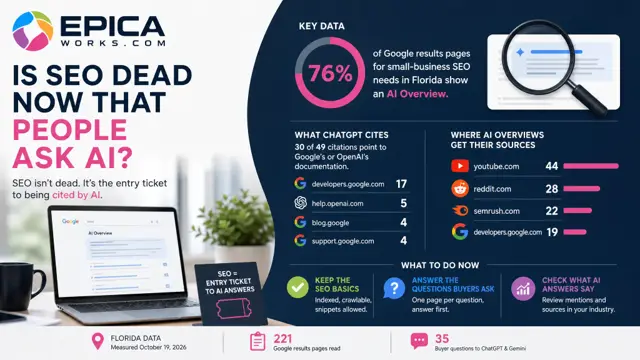
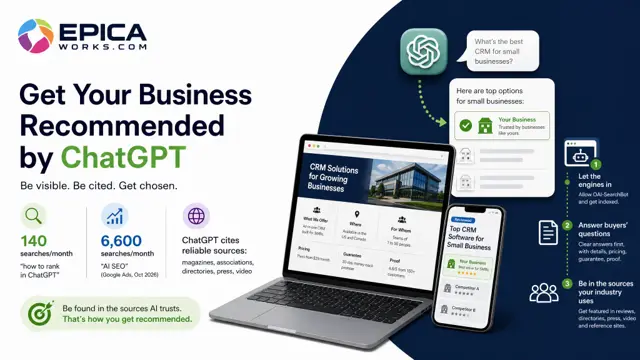
Ask ChatGPT and Gemini five questions your customers ask, write down the sites they cite, and get your business onto one of them: a directory, an association or a local paper. That is digital PR for an owner: being mentioned on the pages AI answers read.
Say you asked ChatGPT who to call for a roof leak in your town, and the answer named a review directory and a newspaper roundup, with three roofers you have never heard of. Those names did not come from ads. They came from pages other people wrote, and getting onto one of those pages is a job you can start this afternoon.
What digital PR means for a small business
Marketing and ads put your message on space you pay for. PR, public relations, gets someone else to publish something about you: a directory lists you, an association names you as a member, a reporter quotes you, a magazine reviews your work. Digital PR is that same work aimed at the websites buyers read, and now at the sources ChatGPT and Gemini read before they answer.
For most trades the way into the answer runs through someone else's page. In 14 of the 17 trades we measured, a publication, directory or association sat among the six sources ChatGPT or Gemini cited most, which is why this step sits beside fixing your own site rather than after it.
You can skip it for now if the answers in your trade already name businesses straight from their own websites, or if referrals keep you fully booked. In the first case your own pages carry the weight: start with the page that answers your most-asked question.
Find the sites cited for your trade
This takes about twenty minutes. Open a private window, stay logged out, and ask ChatGPT (with search on) and Gemini the same five questions a buyer asks before calling a business like yours, with your town in each one. For a roofer in Tampa: “Who fixes storm damage on a roof in Tampa?”, “How much does a roof leak repair cost in Tampa?”, “Is my roofer licensed in Florida?”.
Under each answer, open the sources and write down every site named, one line each. The two assistants read different shelves, so you need both lists. A question that comes back with no sources at all gets rephrased with “near me” or a neighborhood and asked again.
You should end with a sheet of ten to thirty site names. Circle the ones that appear more than once.
Pick one realistic site
Now cross names off, in this order:
- Government and official sites: they shape the answer, but nobody gets listed there.
- Competitors, and platforms where you would be one video or thread among millions.
- From what is left, keep the site both assistants cited; if none is shared, the one cited most often.
- On a tie, keep the one with a door you can open yourself.
What survives usually falls into one of four kinds, and each has its own door:
| Kind of site | How you get on it | Who does it |
|---|---|---|
| Directory or review site (Angi, Yelp, the BBB) | Claim or create the profile, verify it | You, in an hour |
| Trade or professional association | Join; check the member directory is public | You, plus dues |
| Local paper or trade magazine | Pitch an editor a useful fact or comment | You, or a PR agency |
| Consumer guide or “best of” roundup | Editorial choice; you cannot apply | Skip it this month |
Pick one target for the month and leave every other name alone until you are on the first.
Get listed, joined or quoted
On a directory, claim the profile and use the exact same name, address and phone number as your website, character for character. Fill in the services and the towns you cover, add photos of real jobs, and ask three recent customers to leave a review there. With an association, once you are in, make sure your entry in its member search links to your site.
A local paper or trade magazine needs a story, not an announcement. A press release sent out to be republished everywhere earns little: Google's spam policies list “links with optimized anchor text in articles, guest posts, or press releases distributed on other sites” as link spam, and they count paid articles with links that pass ranking credit the same way. A link that comes with a real article about you is a side effect of the mention, not the goal.
💡 Tip: Send the editor one fact from your own work their readers do not have yet, such as the fault you repair every week or the question customers ask before they buy, rather than news about your company.
A digital PR agency earns its fee only in that last case, where the target is a publication and getting in takes editor contacts. Before paying one, ask: “Which of the outlets ChatGPT and Gemini cite for our trade have you placed a client in, and can I read the article?” A listing or a membership needs no agency at all.
Check it worked
A month after your profile goes live or the article runs, open a private window and ask the same five questions again, word for word. Two things to note on the same sheet, with the date: whether the site you targeted is still cited, and whether any answer now names you. One answer is one draw, so ask each question twice before you judge.
If the site is cited and you are listed but not named, give it another month and keep collecting reviews there. If the site has dropped out of the answers, go back to your sheet and take the next name on it.
This week, run the five questions in both assistants, cross the list down to one site, and write that name and today's date at the top of the sheet you will check next month. Epica's free analysis runs the same questions for your business if you would rather start from a measured list.