Questions
What Generative Engine Optimization Is and How It Works
· 2 min read
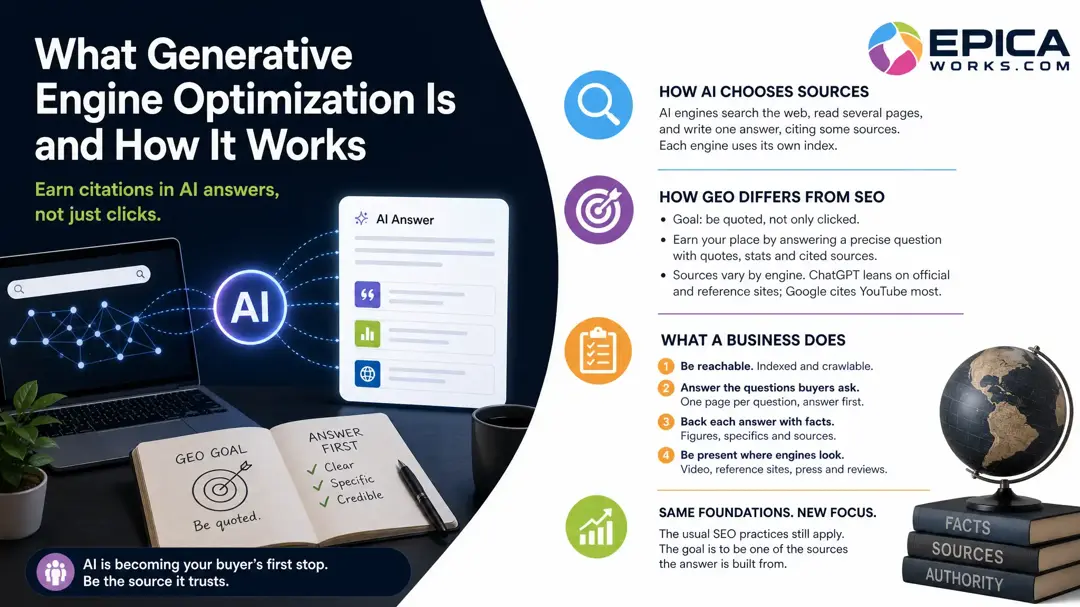
Generative engine optimization (GEO) is the work of getting a business's pages cited, and its name mentioned, in the answers that AI engines write: ChatGPT, Gemini, and Google's AI Overviews and AI Mode. SEO aims to rank a page in a list of links. GEO aims to make that page one of the sources the answer is built from.
Other names for the same work
Answer engine optimization (AEO), AI search optimization and LLM SEO all mean the same thing. GEO is the most searched of these names, and it comes from a 2023 research paper, GEO: Generative Engine Optimization, which described AI engines as search engines that answer by summarizing several sources.
How an AI engine chooses its sources
When someone asks a question, the engine searches the web, reads several pages and writes a single answer from them, citing some along the way. Google's AI Overviews and AI Mode can run several related searches to build one answer. Each engine reads the web through its own index: Google through its search index, ChatGPT through its own crawler, OAI-SearchBot. A page that is not in those indexes cannot be cited.
How GEO differs from SEO
The foundations are the same. Google's guide to AI features and your website says there are no extra requirements to appear in AI Overviews or AI Mode: a page that is indexed and can show with a snippet is eligible, and the usual SEO practices apply.
What changes is the goal and the competition:
- The goal is to be quoted, not only clicked. An answer cites a few sources instead of listing ten links.
- A page earns its place by answering a precise question. The GEO paper found that adding quotations, statistics and cited sources to a page were among the changes that raised its visibility in AI answers the most.
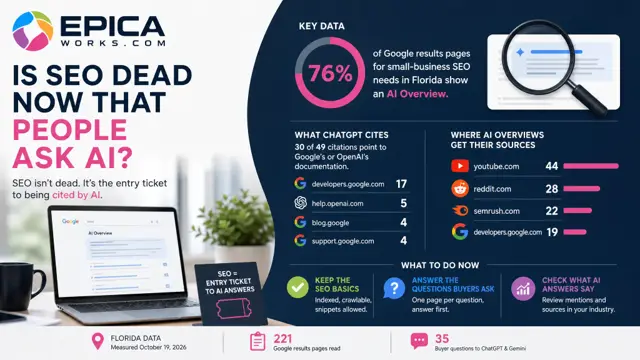
- The sources vary by engine. Across the industries we measure, ChatGPT leans on official and reference sites, while Google's AI Overviews cite YouTube most.
What a business does
- Be reachable. Pages indexed by Google, and ChatGPT's crawler not blocked.
- Answer the questions buyers ask. One page per question, with the answer first.
- Back each answer with facts. Figures, specifics and sources an engine can quote.
- Be present where the engines look. Video, reference sites, press and reviews in your industry.
To see what buyers in each industry ask AI and which sources the answers cite, browse the industry cards on Epica.