What content creation agencies do and what they cost
· 5 min read
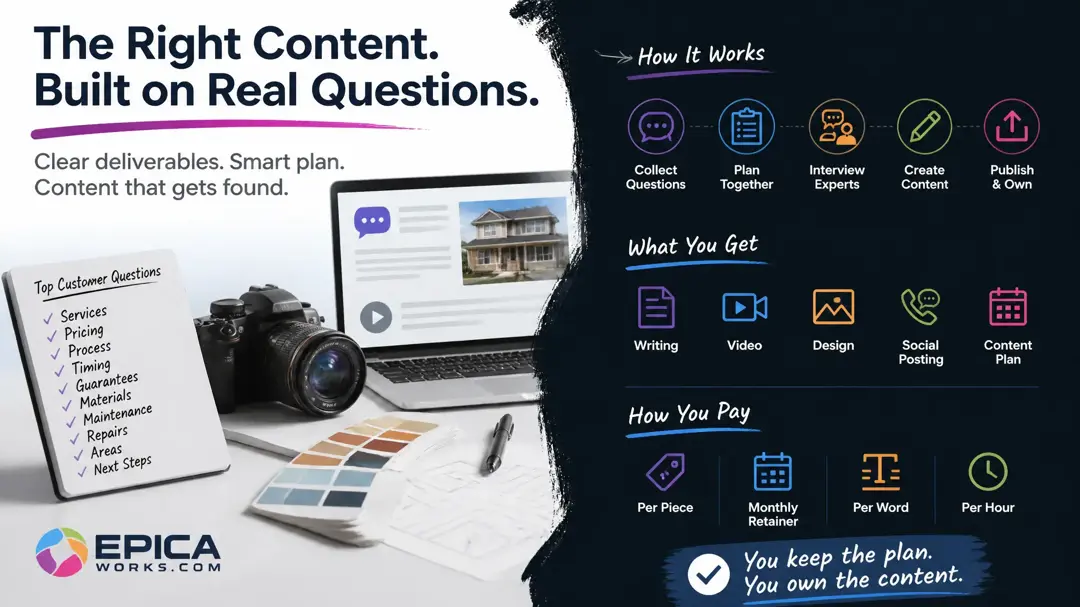
A content creation agency writes, films and designs what you publish, priced per piece or by retainer, and the price follows the hours each piece gets. Hand it the questions your customers ask, and keep the plan, the approvals and the copyright in your name.
You may already have paid for content once: four blog posts a month, written by someone who never spoke to you, about topics nobody had asked. The pages went up, the calls did not change, and the invoice kept coming. The steps below put the plan in your hands before the agency writes a word.
What writers, video crews and designers deliver
Content creation agencies and content marketing services sell three crafts, often bundled: writing, video and design. Some also schedule social posts or plan a calendar. Read any quote against this table, one line per service, and ask for a sample of each line you would pay for.
| Service | What arrives each month | Check before you pay |
|---|---|---|
| Writing | service pages, answers to customer questions, blog posts, emails | a sample page in your trade, not a generic one |
| Video | short clips for social, explainers, job walk-throughs | who films, who edits, and whether you get the raw files |
| Design | graphics, covers, photos edited, infographics | the editable source files, not only the exports |
| Social posting | the same pieces cut for each platform | which platforms, and who answers replies |
| Content plan | a list of pieces with dates | that each line names a real customer question |
The line that matters most is the last. A deliverable you can check is a named page answering a named question by a named date; “four blog posts a month” is a quantity, not a plan.
Build the content plan with the agency, not from it
The question owners ask is how to get a content marketing plan out of an agency. The answer is to write the input yourself and let the agency do the craft, in this order:
- Open your call log, your sent email and your quote requests, and copy the ten questions customers asked most, in their own words.
- Send the list to the agency and ask for a plan with one piece per question: the title, the format (page, video or both), the searches it targets and the publishing date.
- Approve the plan only when every line maps to a question on your list. A line you cannot trace to a customer is a topic the agency picked to fill the month.
- Book a short interview per piece. Fifteen minutes on the phone gives the writer your price range, your area, the mistakes you see on jobs and the photos you can supply.
That interview is what separates a page only you could publish from one any competitor could. The page answering the question you hear most by phone goes first, answered at the top in the customer's words, with what only you can give: your price range, your area, photos of real jobs. Put prices and service areas in page text, never only in an image or a PDF, so search engines and AI assistants can read them.
What a content agency costs, and what moves the price
Agencies rarely publish content prices, so compare by the way they charge before you compare totals:
| Model | You pay for | Fits when | Watch for |
|---|---|---|---|
| Per piece | each page, video or design | you want a set number of pages | the rounds of edits included |
| Monthly retainer | a set volume every month | you publish on a schedule | the minimum term and the exit |
| Per word | length | you need text only | padding to reach the count |
| Per hour | the agency's time | interviews, editing, strategy | an estimate before the work starts |
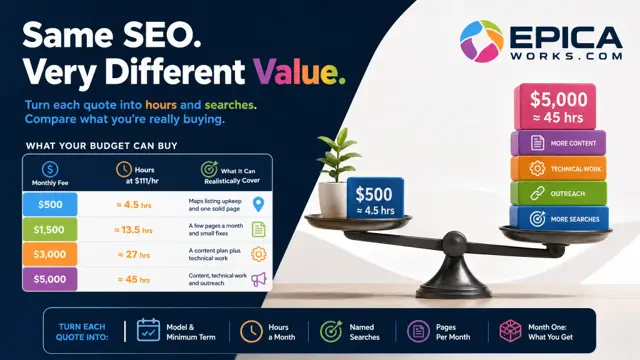
Then ask one question of every quote: how many hours per piece does a writer spend, research and interview included? The Bureau of Labor Statistics puts the median pay of writers and authors at $36.98 an hour (May 2025). A price per page that works out to far fewer hours than research and an interview take is buying text nobody checked against your business.
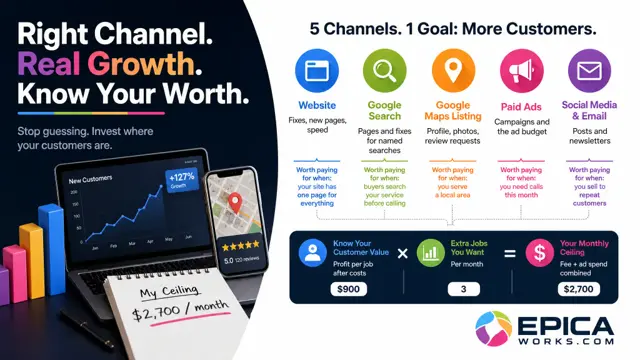
Keep production costs on their own line: a video shoot, stock photos, paid boosts of a post. Compare the total against what new customers are worth to you, using the ceiling method in choosing marketing help.
Put copyright and AI use in the contract
Who owns what the agency makes is not automatic. The U.S. Copyright Office's circular on works made for hire explains that a commissioned work counts as made for hire only if it falls into one of nine listed categories and both sides sign a written agreement saying so; otherwise the author is ordinarily the person who created it.
Ask for a clause, signed by both, that transfers to you the copyright in everything delivered, source files included: the raw video, the layered design files, the drafts.
Ask too which pieces are drafted with AI and who checks them. Google does not ban AI-written pages, but its guidance on generative AI content is plain about the review:
It is critical to manually factcheck and review all AI-generated content for accuracy and trustworthiness before publishing.
Write into the contract that a named person on the agency side checks every fact, price and claim, and that you approve each piece before it goes live.
Judge the first three months, or skip the agency
Give the first pieces three months. Then check three things: whether the page shows up for the question it answers in Search Console, whether new callers mention it when you ask what they read before calling, and who ChatGPT and Gemini name when you ask that question logged out, with your town in it. One answer is one draw, so repeat each question and date every reading.
An agency is the wrong buy if you cannot give fifteen minutes per piece, since the interview is the part no one can do without you. It is also the wrong buy if your work comes by referral and your calendar is full, or if what you need is a single set of website pages: that is a project with an end date, not a retainer.
💡 Ask for a paid trial: before signing a retainer, pay for one page on your most-asked question. How the agency runs the interview and handles your corrections tells you how the next twelve months will go.
This week, copy the ten questions customers asked most from your call log and email, and send the same list to two agencies with three requests: an outline for the first page, the writer hours behind it, and their copyright clause. Their replies are your comparison.